Router templates that fit your bushing. Print one tonight.
Upload an SVG or type a word. InlayForge offsets it for your guide bushing, splits it to fit your printer bed and hands you a print-ready 3MF.
Offset SVG free · your own shape from $5.99 · Bambu, Prusa, Orca
A custom router template usually means days of waiting
Offset the template by hand
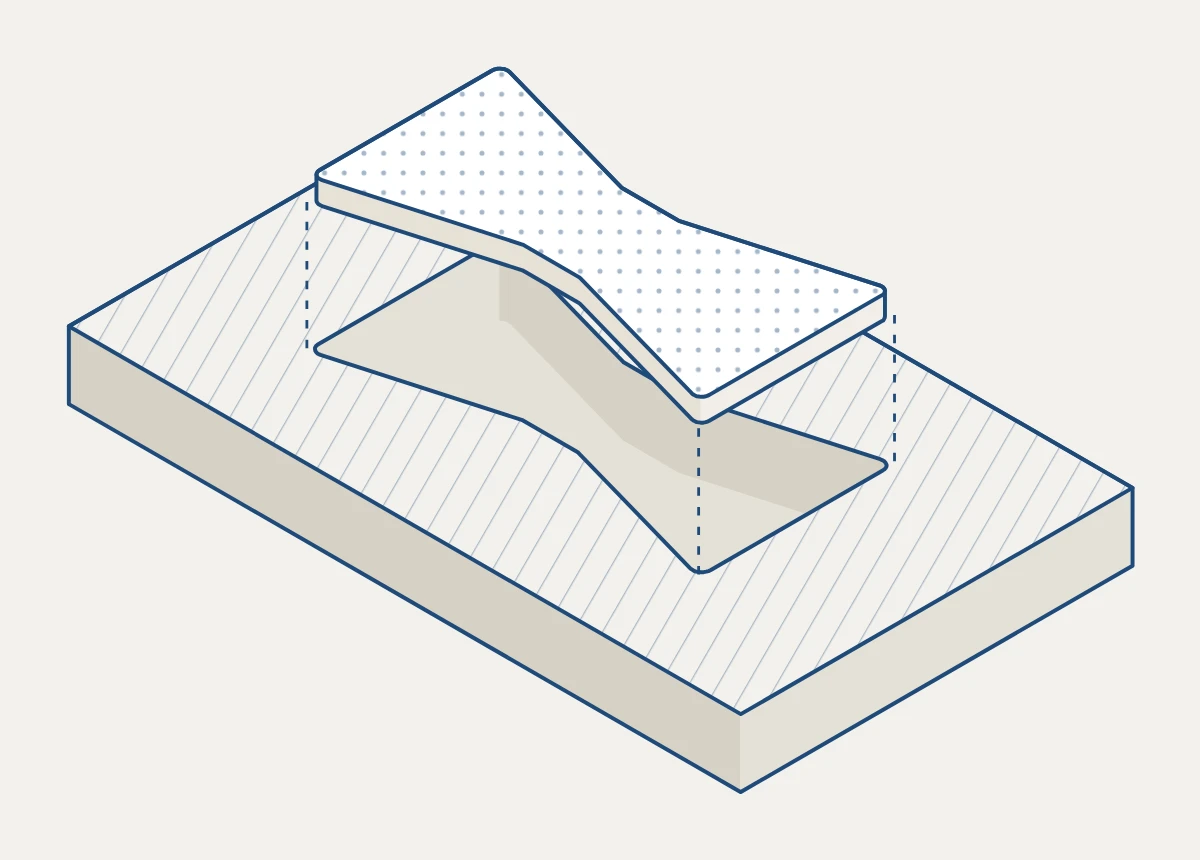
Draw the shape, then move every edge out by half the bushing minus half the bit. Miss one tight corner and the inlay rocks in its pocket.
Order custom acrylic
A custom acrylic template costs $65 to $225 and takes days to arrive. A new size or a new bushing means a new order.
Use a template offset calculator
Free calculators grow the outline and stop at an SVG. The thickness, the tiles and the print are still yours to work out.
Print a template tonight
InlayForge works out the offset, the thickness and the tiles, and gives you a 3MF your slicer opens as it is. Print tonight, rout tomorrow.
How a drawing becomes a template that fits
Six steps from your line to the inlay. InlayForge does the first three; your printer and router do the rest.
Start with the inlay outline
Upload an SVG or DXF, type a word, or pick one of the six built-in shapes, such as a bowtie.
Offset it for your bushing
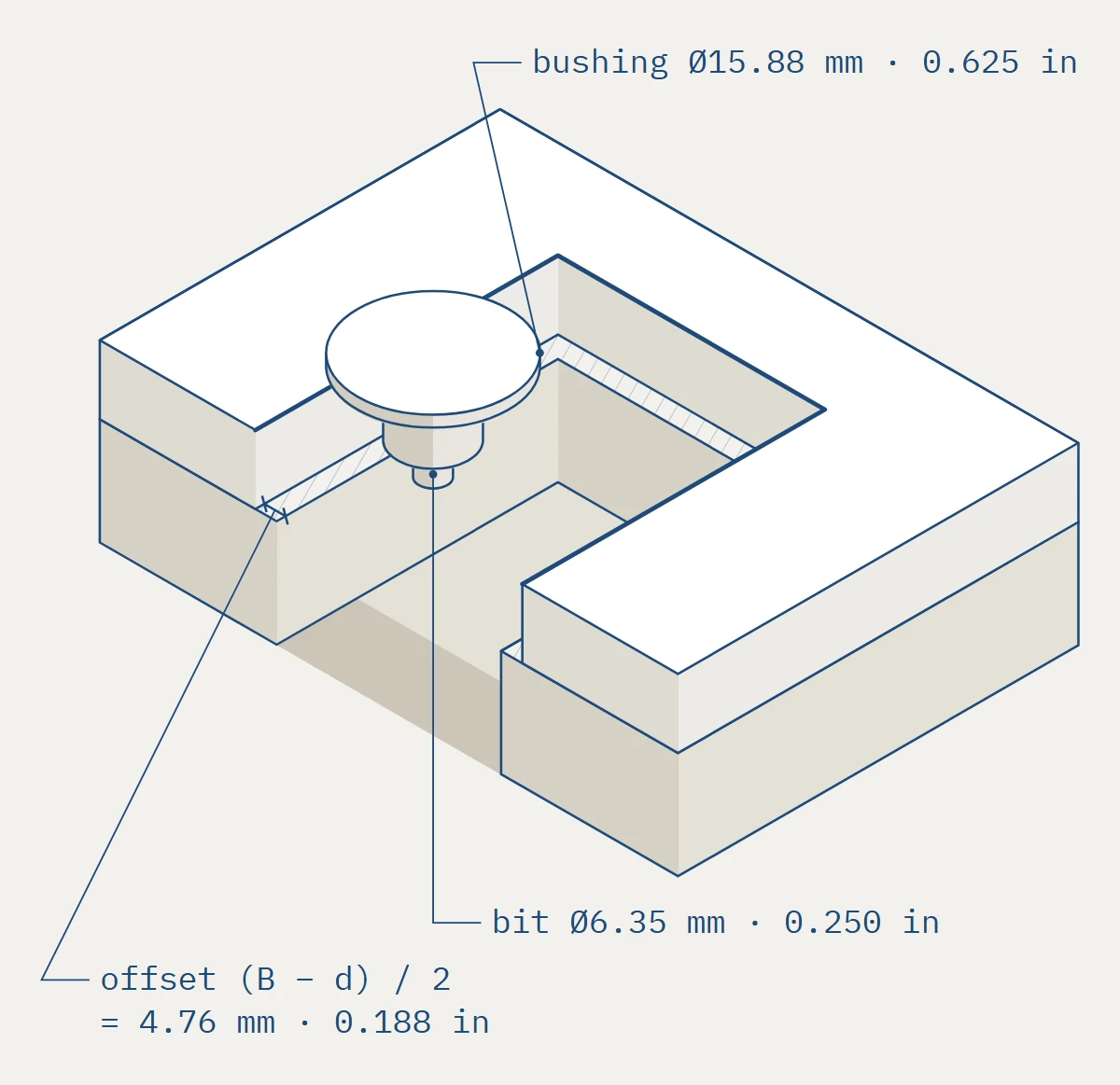
Pick your bushing and bit, or your inlay kit. The template edge moves out by (bushing − bit) / 2 plus 0.25 mm per side.
Split the template to fit your bed
Pick your printer. Anything bigger than its bed splits into tiles that key together with 30° dovetails, no pins. Every seam crosses the edge at 90°.
Print the 3MF
Open it in Bambu Studio, PrusaSlicer or OrcaSlicer. PLA, 4 walls, 0.2 mm layers, 1 mm thicker than your bushing spigot is long.
Rout along the template edge
Clamp the template to the board and keep the bushing against its edge. The bit cuts your outline, not a bigger one.
Set the inlay
Cut the insert from the same drawing in Piece mode, or with your inlay kit collar, then glue it into the pocket.
The template edge moves with your bushing
Change the bushing, the bit or the mode and the offset, corners and checks update. This is the generator’s own engine, running in your browser.
- Offset per side
- 1/8"
- Smallest corner
- 1/8" radius
- Tiles
- 2
- Checks
- All passed
- Template edge
- Router path
- Client line
- Tile seam
Four checks run on every template before you print
A template can look right on screen and still fail at the router. These four problems ruin a pocket.
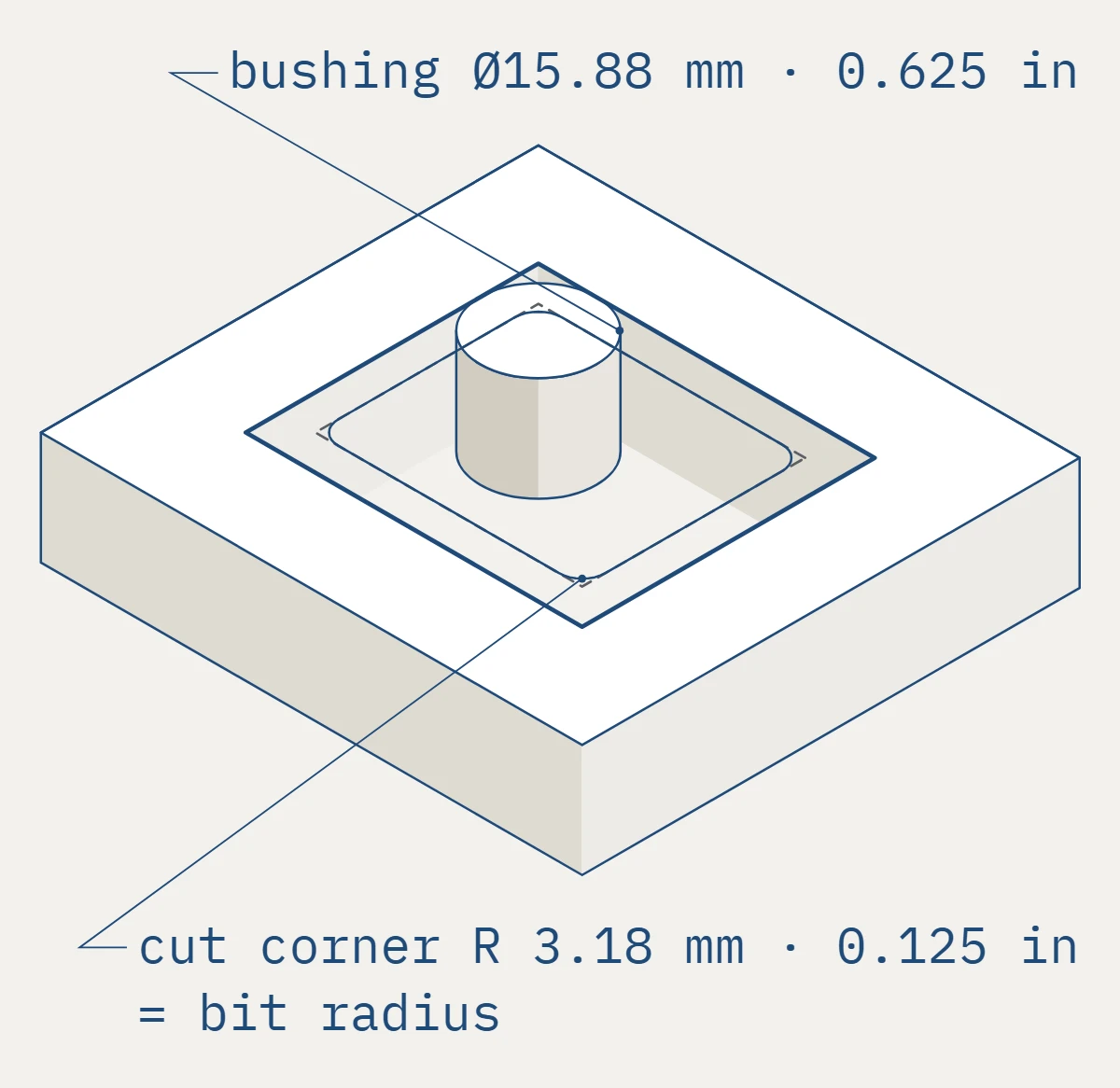
Corners tighter than the bushing
A bushing cannot follow a sharp inside corner, so the cut comes out round. Corners under the bushing radius are marked before you print.
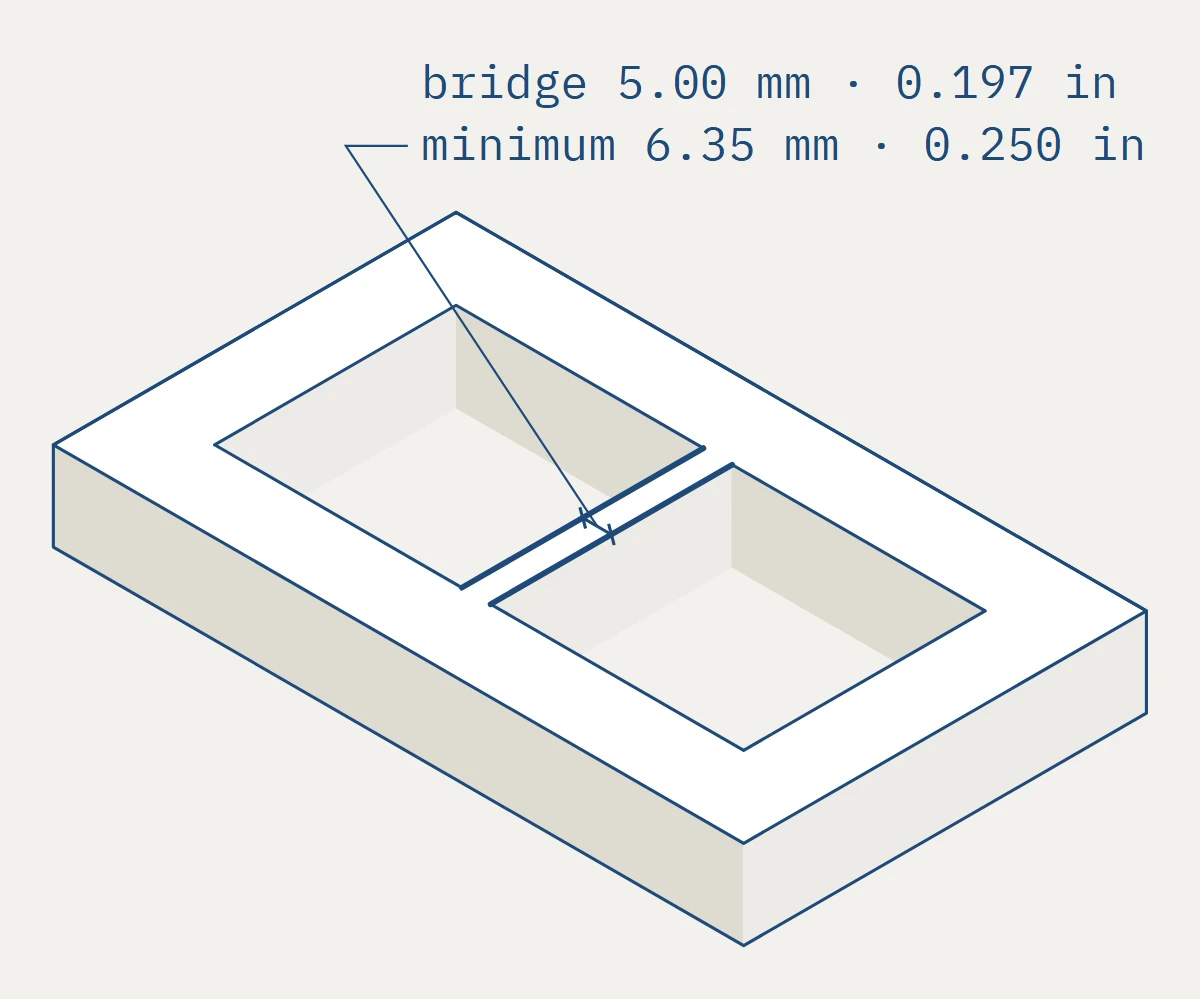
Bridges under 1/4 in
Plastic thinner than 6.35 mm (1/4 in) between two openings snaps on the first pass. Each thin bridge is shown where it is.
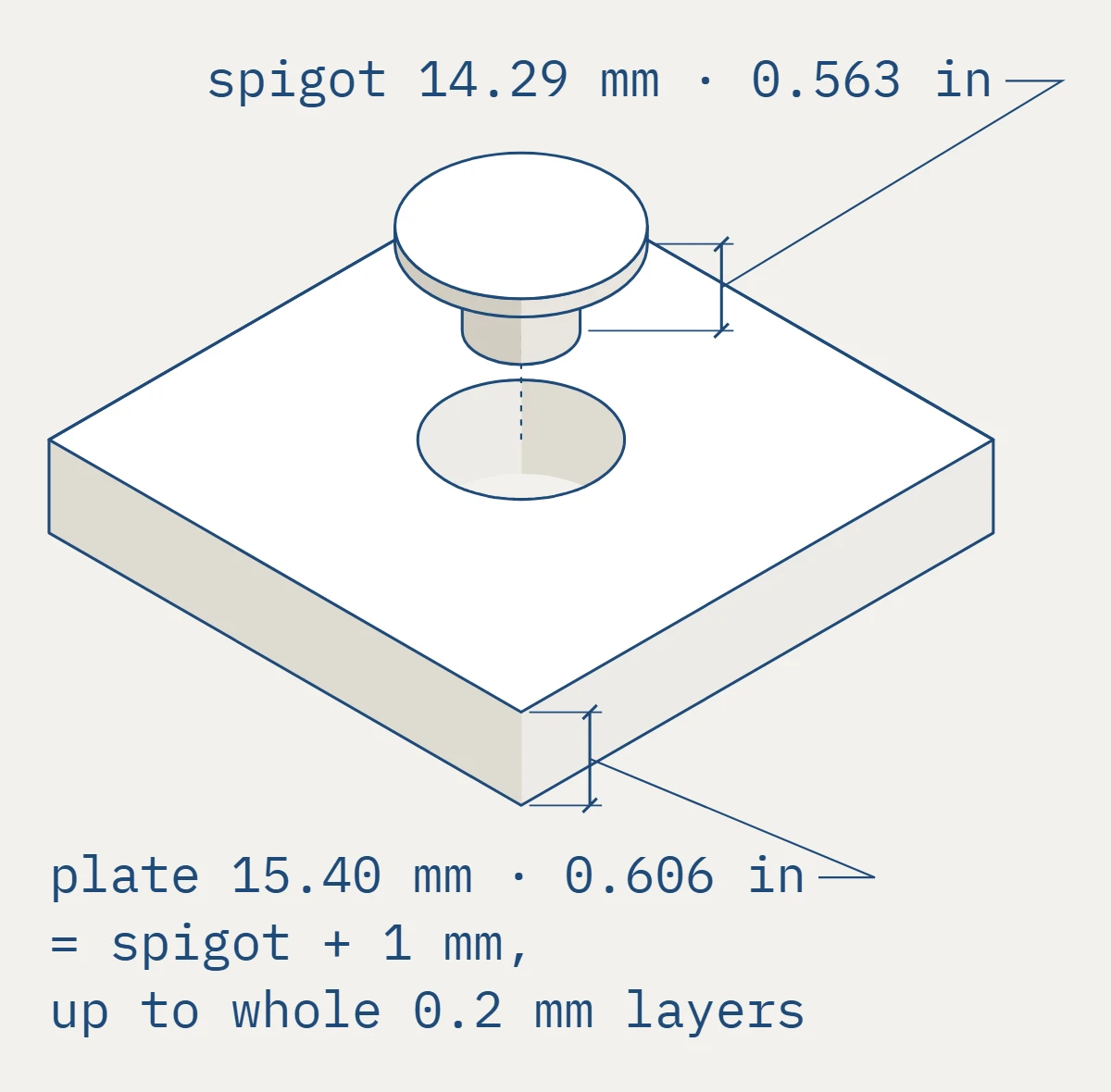
A template thicker than the spigot
The bushing must never touch the board. The template is its spigot plus 1 mm: a 14.29 mm (9/16 in) spigot gets a 15.4 mm plate.
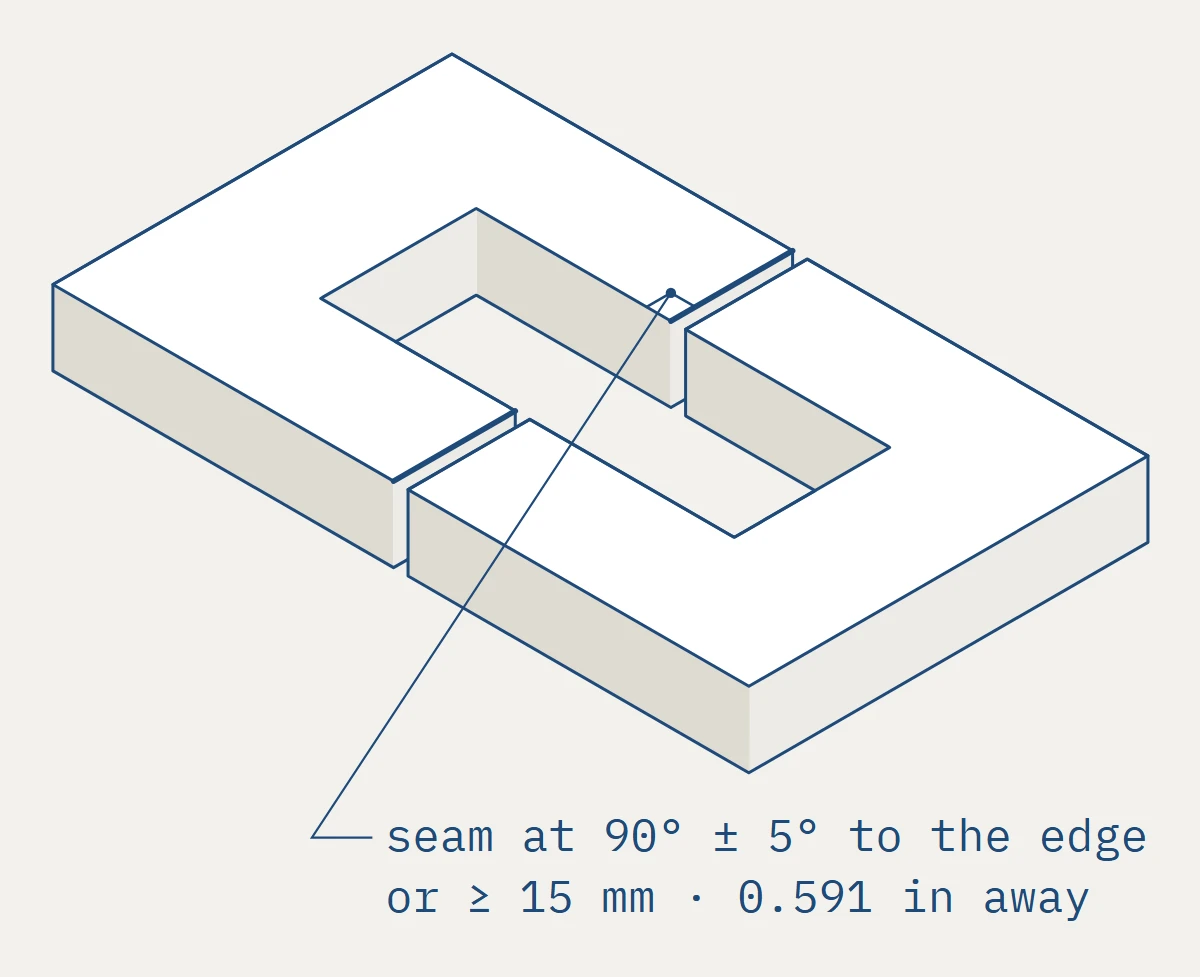
Template seams square to the edge
Where a template splits into tiles, the seam crosses the edge at 90°, so the bushing rolls over the joint instead of catching it.
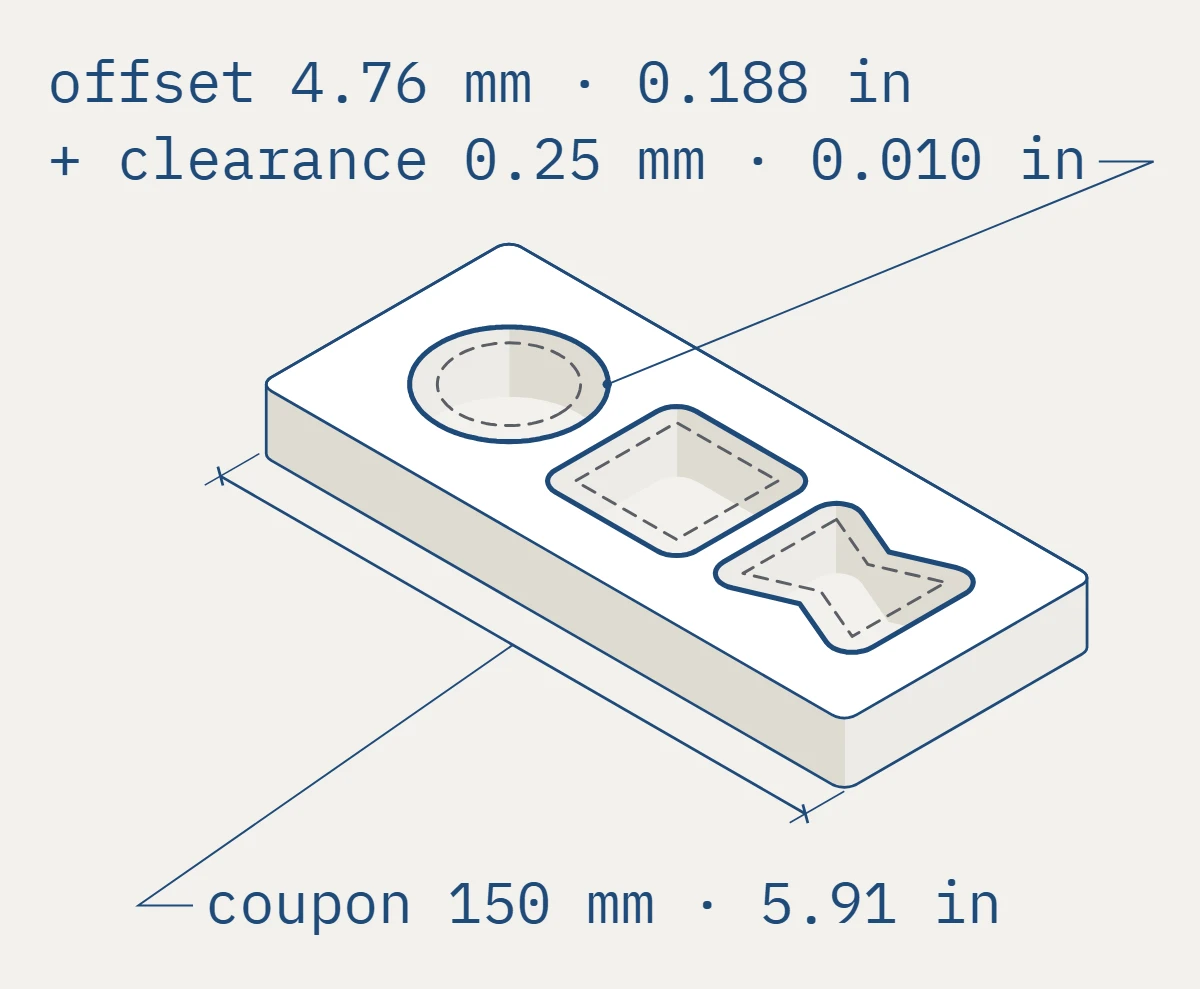
Route a printed test coupon first
Fit clearance is 0.25 mm per side by default, a figure woodworkers already use for printed PLA templates. Printers differ, so rout the 150 mm coupon once and adjust if the insert is tight or loose.
Offsets for six common bushings with a 1/4 in bit
| Bushing | Outside diameter | Offset per side | Source |
|---|---|---|---|
| Porter-Cable 42033 1/2" | 0.500 in12.70 mm | 0.135 in3.43 mm | Maker's datasheet |
| Porter-Cable 42024 3/4" | 0.750 in19.05 mm | 0.260 in6.60 mm | Unverified |
| Bosch RA1113 5/8" | 0.625 in15.88 mm | 0.197 in5.01 mm | Maker's datasheet |
| Trend GB16 16 mm | 0.630 in16.00 mm | 0.200 in5.08 mm | Maker's datasheet |
| Trend GB30 30 mm | 1.181 in30.00 mm | 0.475 in12.08 mm | Maker's datasheet |
| Festool KR-D 24 (OF 1400) | 0.945 in24.00 mm | 0.357 in9.07 mm | Owner-reported |
What you can make with a printed template
Each card opens the generator ready for that job. The built-in shapes are free as a 3MF up to 170 mm.
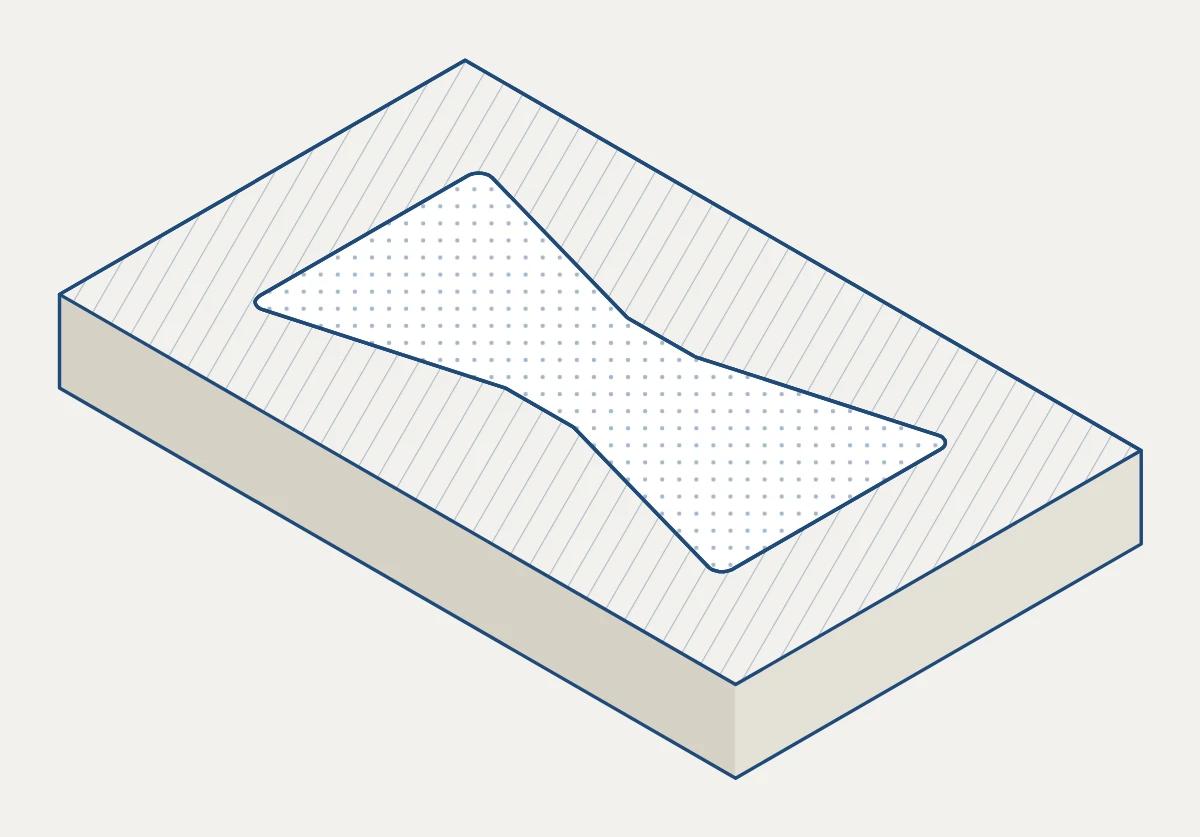
Bowtie inlays
Butterfly keys across a crack or a glue line, at the length and waist you set.
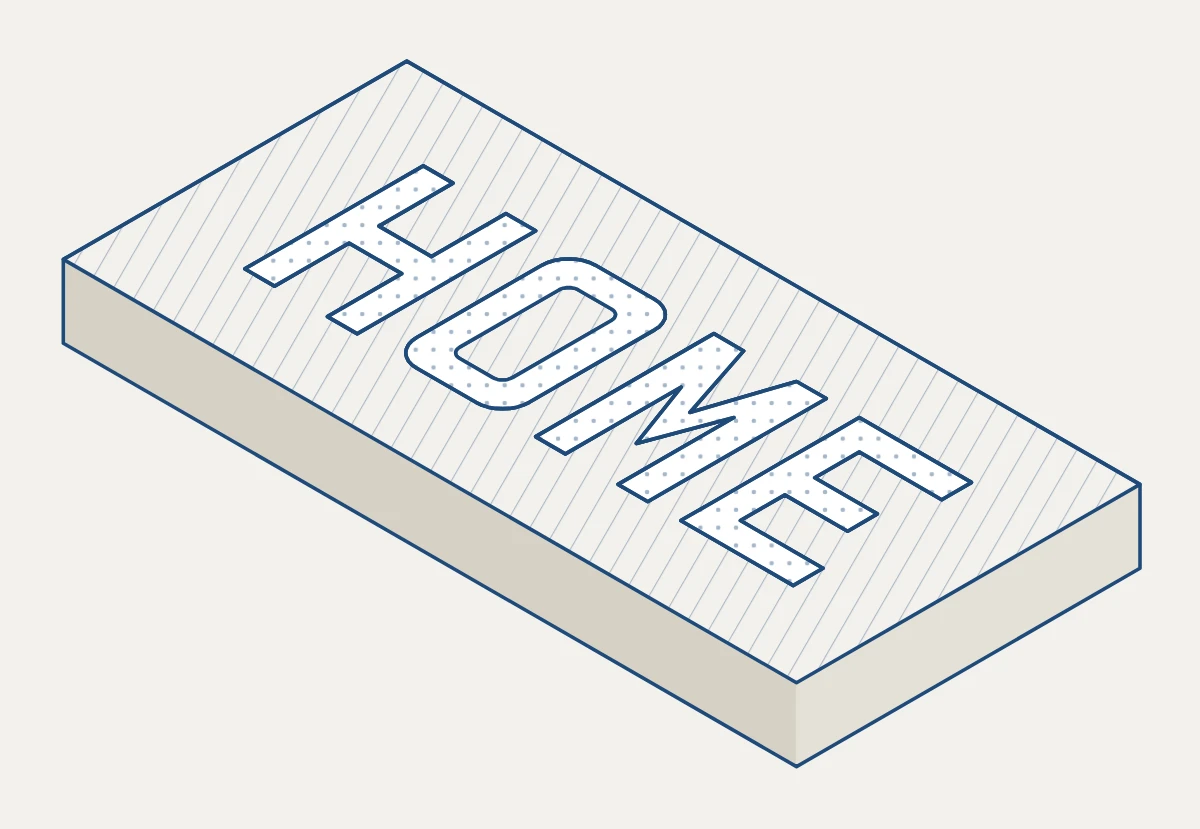
Letters and signs
Type a name or a house number and inlay it in a contrasting wood.
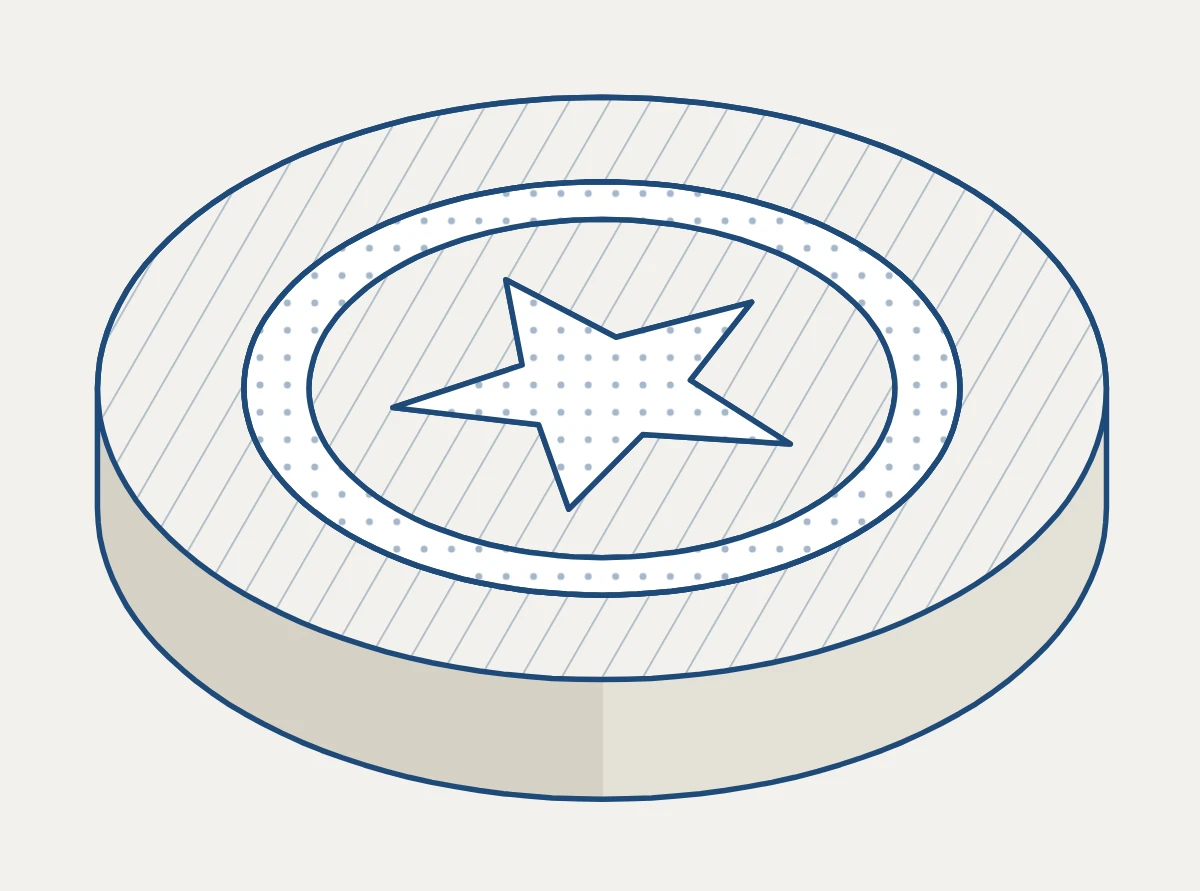
Logo inlays
Upload your logo as an SVG. Corners the bushing cannot reach are marked first.
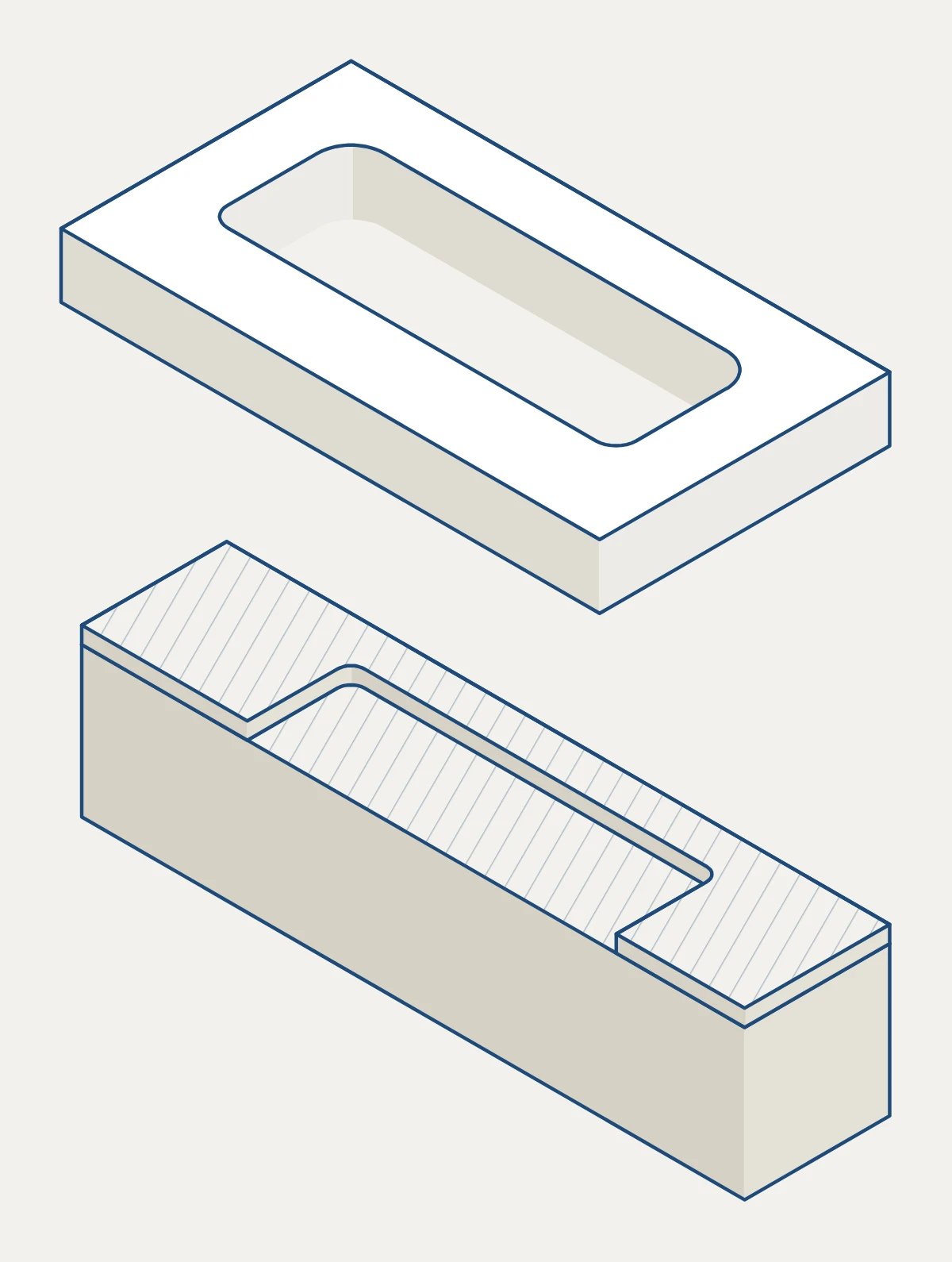
Hinge mortises
A rounded rectangle sized to the hinge leaf, for doors, boxes and cabinets.
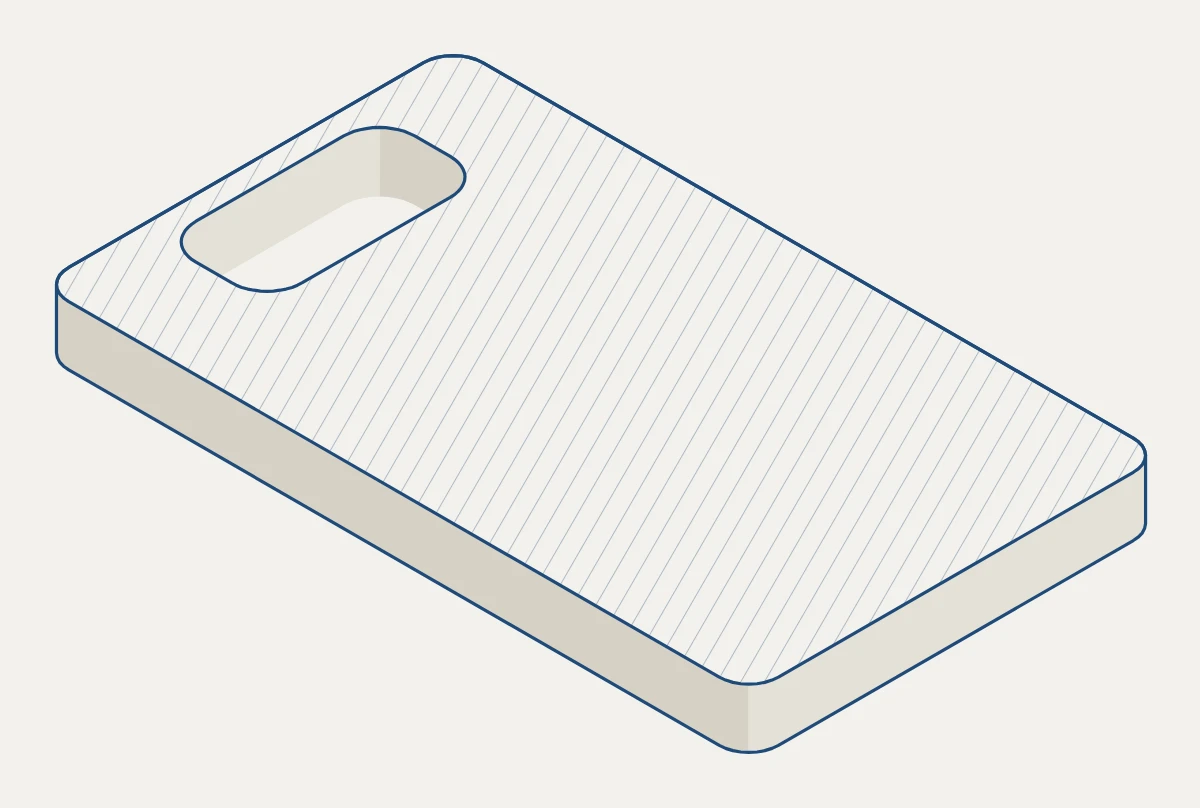
Board handles
An oval finger hole at the end of a cutting or serving board.
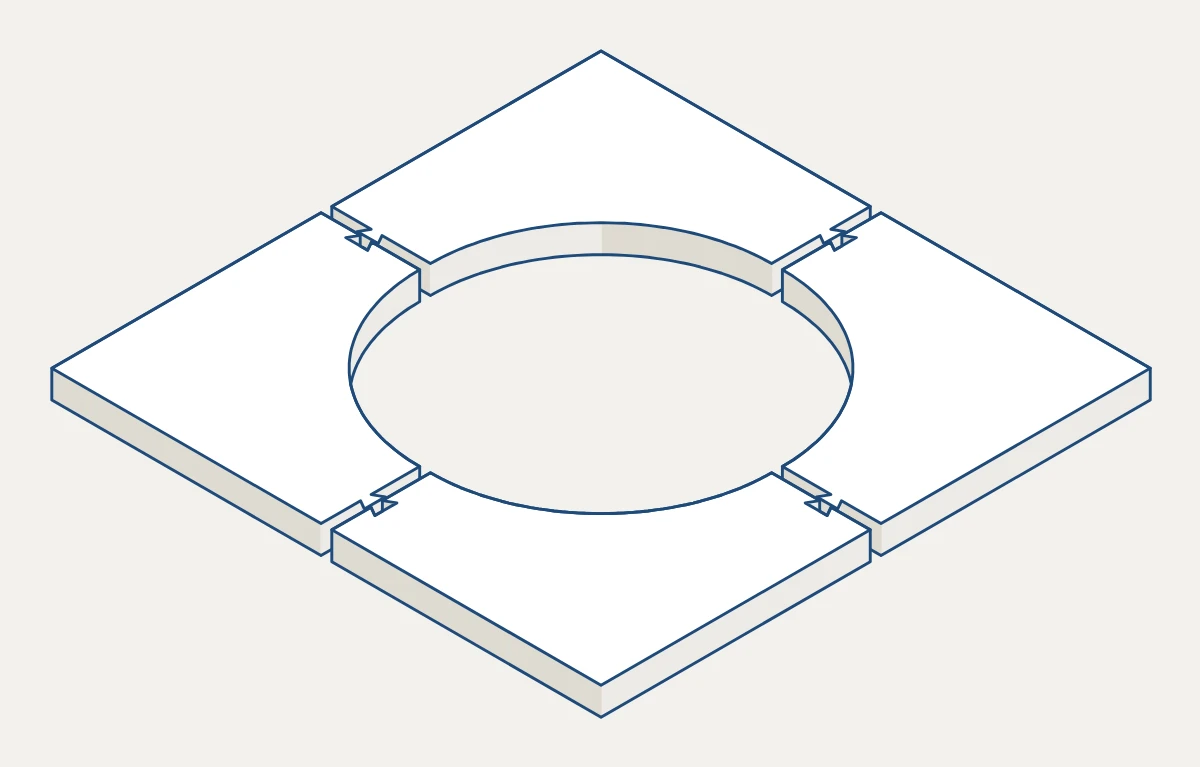
Large tiled templates
A 300 mm opening prints as four tiles that key together with dovetails.
You pay once per template, not per print
A custom acrylic template costs $65 to $225 and takes days to arrive. Here the built-in shapes are free and your own drawing is one template, at any size.
InlayForge by Fabulayer. Checkout and card statements show Fabulayer.

Free
$0
Bowtie, circle, oval, rounded rectangle, heart and star as 3MF and laser SVG and DXF: one plate up to 170 mm, with the InlayForge mark. Offset SVG for any shape.
Start freeOne template
$5.99
One drawing of your own, no mark, tiled to fit your bed, plus a whole-plate laser file
5-pack
$17.99 $3.60 a template
Five drawings, no mark, tiled, no expiry. The best buy for several projects.
Pro
$59 a year after launch
Unlimited templates under fair use, and saved designs
One template is one drawing. A new SVG, DXF or text is a new template; a new bushing, bit or mode for the same drawing is not.
Questions about printed router templates
Will it fit my bushing?
Pick your bushing from the presets or type the outside diameter you measured. The offset is (bushing diameter − bit diameter) / 2 per side, plus 0.25 mm fit clearance you can change.
Does it work with my inlay kit?
Yes. Whiteside 9500 and Rockler 27593 kits are presets: a 5/16 in bushing, a 9/16 in collar and a 1/8 in bit. One template cuts the pocket and the insert.
Are metric bushings in the presets?
Yes. Trend GB 10 to 32 mm and Festool KR-D 17 to 30 mm sit next to the Porter-Cable and Bosch inch sizes. Makers rarely publish the spigot length, so measure yours.
Which printer and filament?
Any printer whose slicer opens a 3MF: Bambu Studio, PrusaSlicer and OrcaSlicer all do. Print in PLA; it is stiffer than PETG and holds a crisper edge.
How do the tiles join?
Each seam has a 30° dovetail, with no pins. Lay the tiles face down, lower one onto the other so the dovetails drop in, pull them apart until they seat, then tape across the seams.
What is free?
The offset SVG for any shape, and a 3MF plus laser SVG and DXF for the six built-in shapes on one plate up to 170 mm. The free plate carries a small InlayForge mark outside the cut, so it never reaches the wood.
Can I sell what I make?
Yes, on any plan. Sell the boards, boxes and signs you make. The template files themselves may not be resold or shared.
What if a template does not fit?
If a paid template, printed to size, does not fit the bushing you chose, it counts as a faulty file: write to us and we fix it or refund it.